
A tool for this transition

The Time-In ToolKit®
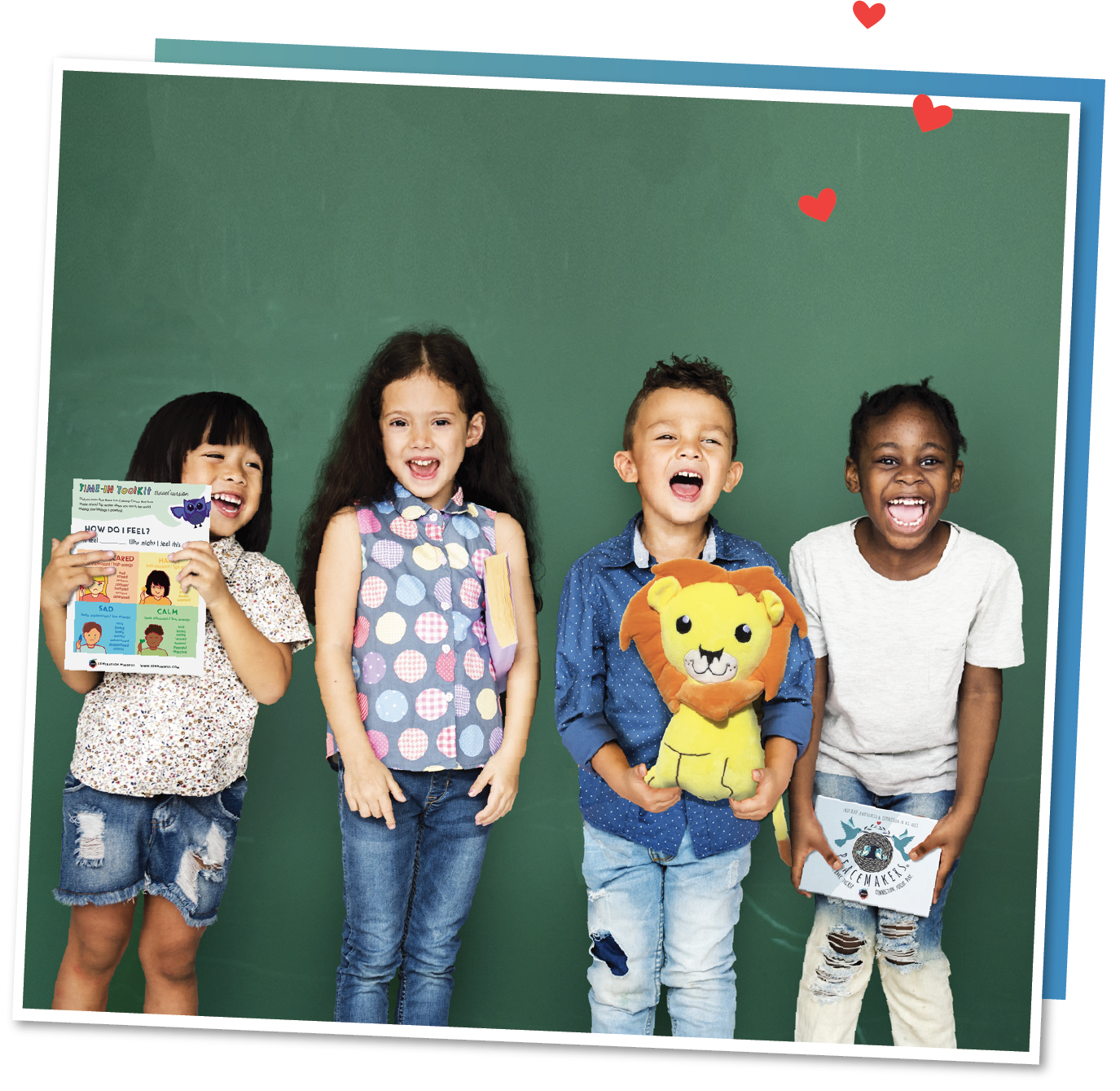
An all-in-one emotional regulation kit. Help your child name what they feel — and model naming what you feel.
- 6 feelings posters
- 35 PeaceMakers affirmation cards
- Activity mat + calming cards
- Digital manual & audiobook
Share
Social Emotional Learning in the Classroom: Simple Tools for the New School Year


At 8:05 a.m., a classroom may already be carrying a lot.
One child cannot find a folder. Another is worried about a new seat. Someone else is holding back tears because goodbye at drop-off felt harder than expected.
Before the first lesson begins, children are already bringing their feelings, nervous systems, relationships and developing skills into the room.
This is where social emotional learning in the classroom begins.
It is not an extra subject saved for one weekly lesson. It is the shared language children and adults use to notice feelings, move through hard moments, repair relationships and return to learning.
A strong social emotional learning classroom is not one where nobody struggles. It is one where children learn that feelings are data, behaviour is communication and support is available without shame.
For the new school year, the most useful tools are often the simplest ones: concrete, predictable, playful and easy to repeat.
What Is Social Emotional Learning in the Classroom?
Social emotional learning, often called SEL, helps children build emotional awareness, self-regulation, relationship skills, empathy and responsible decision-making.
In practice, that may look like naming a feeling before solving a problem, asking for a break, practising repair after conflict or holding a classroom boundary without humiliation.
Emotional literacy is an alphabet.
Asking children to regulate without teaching them how to recognise and name feelings is a lot like asking them to read without first teaching letters and sounds.
The goal is not perfect calm.
The goal is practice.
1. Begin With a Simple Feelings Check-In
A feelings check-in gives children a predictable way to notice what is happening inside them before the day becomes busy.
Children might point to a feelings poster, place a name card beside an emotion, choose a colour or hold up a card that matches how they are feeling.
The check-in is not a demand to explain. A child may choose “worried” without sharing why.
Try language such as:
“Take a moment to notice what feeling is visiting today.”
“Your feeling gives us information. You do not have to fix it before you come in.”
When the routine stays simple and consistent, children begin building the habit of checking in with themselves.
2. Make Emotional Literacy Visible
Classroom walls can reinforce the emotional language children are learning every day.
Useful social emotional learning bulletin board ideas include:
-
A feelings vocabulary wall with faces and body clues
-
A “What can I try?” board with three calming choices
-
A repair board with phrases such as “Can we try again?”
-
A “Feelings are data” display that separates feelings from actions
Keep the display uncluttered.
A strong bulletin board gives children a few familiar words they can use during real classroom moments. It becomes a practical tool rather than decoration.
3. Use One Repeatable Co-Regulation Script
During a hard moment, adults often reach for more words.
But a child whose nervous system is overwhelmed may not be able to process a long explanation. One short, repeatable script can become powerful behaviour support for educators:
“You are safe to feel. I am here. We will take the next step together.”
Co-regulation does not remove limits. An educator can stay connected and firm at the same time:
“You are allowed to feel angry. I will not let you hit.”
“You can feel disappointed. The answer is still no.”
Firmness and love are not opposites.
A clear boundary brings the predictability that makes regulation more possible.
4. Create a Calming Corner in the Classroom
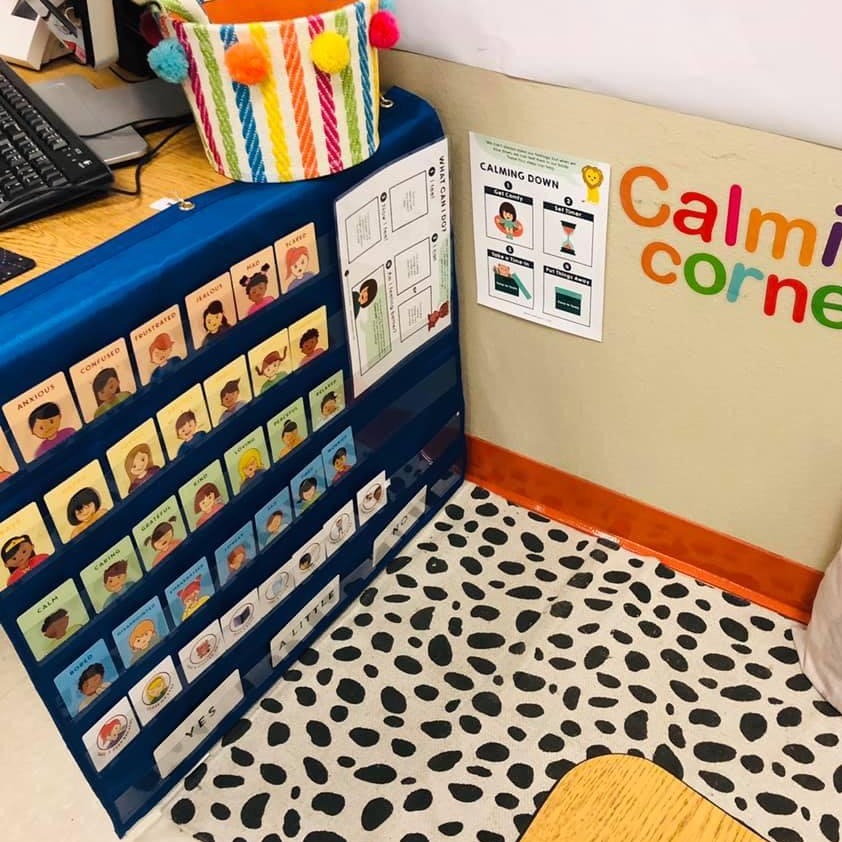
Searches for a calm corner classroom, quiet corner classroom, calm down corner classroom and classroom calming corner often come from educators looking for the same thing: a practical place where children can pause without being punished.
A calming corner in the classroom is not a time-out area.
It is a small, welcoming space where children can notice feelings, use a familiar regulation tool and return when they are ready.
A simple classroom calm corner may include:
-
A soft seat, mat or cushion
-
A feelings poster
-
Two or three calming choices
-
A timer
-
A sensory object
-
A breathing card
-
A small drawing pad
Introduce the space during a calm part of the day. Children can practise using each item and learn what returning to the group looks like.
The message is not:
“Go away until you are easier.”
The message is:
“Your feelings belong here and we have a place to practise moving through them.”
This is a natural place to introduce the [Classroom Time-In Toolkit ], which gives educators a simple, concrete and predictable structure for emotional regulation.
5. Teach Through Play, Art and Movement
Play is the superhighway for learning at every age.
Children often understand an emotional idea more easily when they can act it out, draw it or move it. Social emotional learning art activities also give children a way to communicate when words feel hard to find.
Try:
-
Drawing where a feeling shows up in the body
-
Creating a colour for each emotion
-
Using puppets to practise conflict and repair
-
Freezing in a pose that shows “worried” or “excited”
-
Drawing two endings to the same hard classroom moment
For younger learners, social and emotional learning activities for preschoolers can stay especially concrete.
Social emotional activities for 3 year olds may be as simple as matching facial expressions, choosing between two feeling words or practising one breathing movement with a song.
The goal is not artistic accuracy.
It is building recognition, language and choice.
6. Add SEL to the Lesson Plan in Small Pieces
Social emotional learning activities for teachers do not require a separate 45-minute block.
SEL can fit into morning meetings, read-alouds, transitions or the final five minutes of the day.
Here is a simple 10-minute structure.
Notice
Name one feeling or classroom situation.
“Today we are learning what disappointment can feel like in the body.”
Practise
Use one story, role-play, visual or playful activity.
Connect
Ask where children may notice this feeling at school or at home.
Choose
Offer one safe action they can try when the feeling appears.
Repeat
Return to the same language during real moments throughout the week.
For educators searching for a lesson plan social emotional learning activities PDF, this routine can become a one-page printable for a planning binder.
Free Social Emotional Learning Activities PDF for the Classroom
(Grab this Feelings Charades)
7. Build Shared Language Between School and Home
Children practise emotional literacy more easily when the adults around them use similar language.
A few shared phrases can create continuity:
“Feelings are data.”
“You are safe to feel.”
“We can be curious, not furious.”
“You are having a hard moment. You are not a hard child.”
“We can hold the boundary and stay connected.”
Educators can share one phrase at a time through newsletters, family handouts, conferences or take-home activities.
This keeps family engagement simple rather than overwhelming.
A short family note might say:
This month, our class is practising how to notice feelings before choosing an action. At home, you can ask, “What is your feeling telling you?” There is no perfect answer. The practice is noticing.
For families who want to continue the language at home, Join our FREE App and Read this blog on How to Create a Calming Corner at Home.
What Makes SEL Work Across the School Year?
The beginning of the year brings new routines, relationships and expectations. It can also bring more uncertainty into children’s bodies.
A long list of social emotional learning activities may look impressive, but consistency creates the deeper learning.
Choose a few tools that are:
-
Simple enough to remember during a hard moment
-
Concrete enough for children to see and practise
-
Predictable enough to build trust
-
Playful enough to invite participation
-
Flexible enough to use across ages and settings
This approach supports whole child development while strengthening classroom management strategies and trauma informed practice.
It gives educators a shared way to respond when behaviour is communicating stress, disconnection or a developing skill.
Knowing and doing are different.
The first lesson introduces the language. The repeated classroom moments are where that language becomes part of a child’s life.
A Simple Place to Begin
We are not only helping children get through the school day.
We are teaching the alphabet of emotional literacy, one ordinary moment at a time.
Bring Emotional Learning to Every Classroom