
A tool for this transition

The Time-In ToolKit®
An all-in-one emotional regulation kit. Help your child name what they feel — and model naming what you feel.
- 6 feelings posters
- 35 PeaceMakers affirmation cards
- Activity mat + calming cards
- Digital manual & audiobook
Share
How to Set Up a Calming Corner at Home or in the Classroom


Your child is losing it.
You want to help, but you're not sure what to say or do, or how to make any of this stop.
This is exactly why calming corners exist.
Not as a place to send kids when they've done something wrong, or need to “sit and think about what they did”, but as a safe place children can go to feel their feelings and be supported.
And the beautiful thing? You do not need a big space or a big budget to make one work.
What Is a Calming Corner?
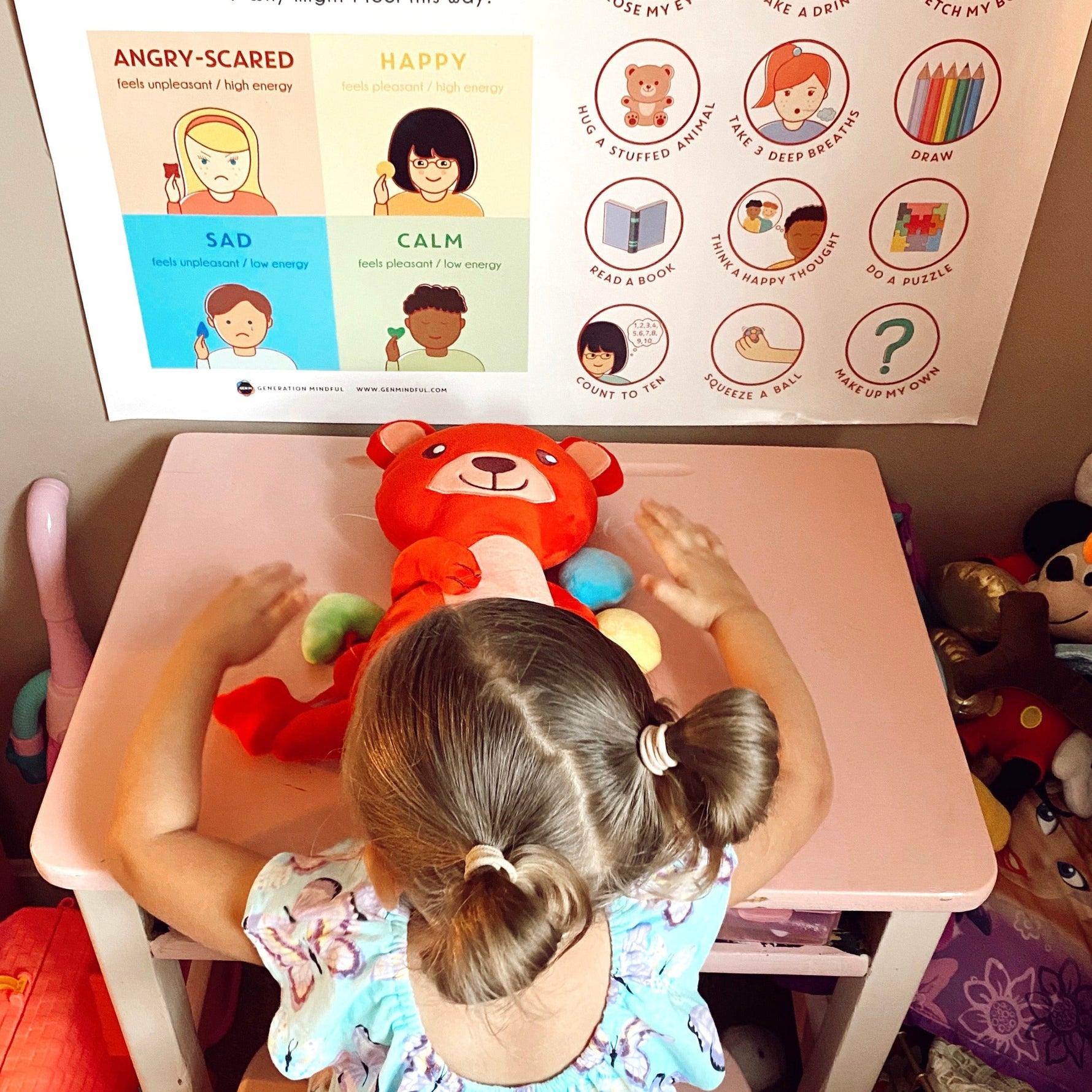
A calming corner (aka a peace corner, cozy corner, or calm-down corner) is a designated space where children go to practice naming, feeling, and regulating their emotions.
It is not a punishment. It's a place where a child learns that big feelings are okay, and that there are real tools to help.
Calming corners are helpful for toddlers and teens alike, and work beautifully at home and in classrooms. And they work best when kids get to practice using them before they actually need them.
Why Calming Corners Work: The Science Made Simple
Here's something worth knowing about big emotions: they are not a behavior problem. They are a brain thing.
Children's prefrontal cortexes, the part of the brain responsible for reasoning and emotional regulation, do not fully develop until around age 25. When kids are flooded with emotion, their lower brain, the part wired purely for survival, takes over. Logic disappears. That is not defiance. That is development.
A calming corner works by giving the nervous system something safe to anchor to. Soft textures, familiar objects, breathing visuals, and a quiet space all send a signal to the brain: you are safe here. And when a child feels safe, they can begin to regulate.
This is co-regulation in action, and it is one of the most powerful things we can offer a child. You can learn more about the brain science behind meltdowns and how to de-escalate with connection in this post.
How to Set Up a Calming Corner at Home
Your calming corner does not have to be Pinterest-perfect to be powerful. A corner, a cushion, and a few intentional items are all you really need.
Choose your spot
Look for a low-traffic area where your child can feel contained and cozy. A corner of their bedroom, a nook under the stairs, or a tucked-away spot in the living room all work well.
Calming corner ideas for home
Think soft, sensory, and familiar. Here are some items to consider adding to your space:
-
A small pillow, bean bag, or cozy blanket
-
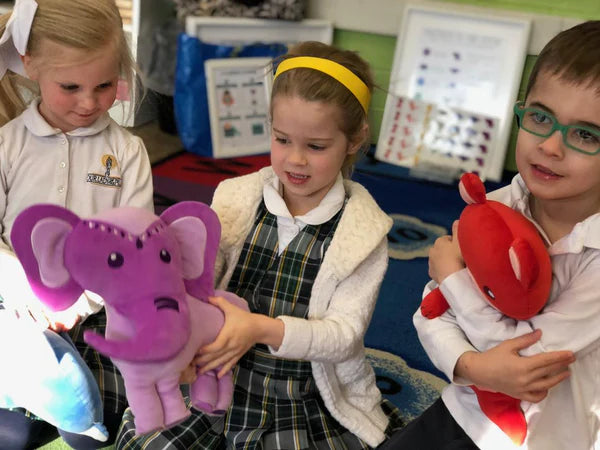
A stuffed animal or comfort toy. Our SnuggleBuddies Emotions Plush are designed to help young children identify and express emotions in daily playful ways.
-
A calming corner poster with feelings, faces and simple steps children can take when they feel upset or overwhelmed.
-
Posters or cards with short, grounding reminders like "I can take a breath" or "I am safe"
-
Fidget or sensory tools such as a stress ball, kinetic sand, or putty
-
Bubbles or a pinwheel for breath practice
-
Crayons and paper or a small feelings journal
Keep your calming space simple. Too much stimulation can overwhelm a child who is already dysregulated. Aim for five to seven items and swap things in and out every few weeks to keep it feeling fresh.
Introduce your calming space before you need it
This is the step most people skip, and it makes the biggest difference when it comes to creating a calming space children actually want to use without an adult prodding them to use one: .
Practice visiting your calming space together during calm, connected moments, and make these visits positive and playful. .
Decorate a sign together and encourage your child to name this special space themselves. When children feel a sense of ownership over their calming space, they are far more likely to want to visit it when big emotions show up.
Calming Corner Ideas for the Classroom
Teachers, this section is for you. And yes, calming corners absolutely belong in classrooms.
Children who have access to emotional regulation tools in the preschool years show better focus, stronger relationships with peers, and fewer behavioral disruptions.
A classroom calming corner is not a reward for certain students, it’s a resource for every student.
Where to put a Classroom Calming Corner
Look for a low-traffic space away from your classroom’s main lesson space. A small bookshelf works well as a natural divider, creating a sense of privacy without isolating children from their classmates.
What to include in a classroom calming corner
Many of the same ideas we shared above for launching s calming space at home will apply here, to launching a calming space in your classroom. Some ideas work especially well in schools include:
-
A feelings chart or calming corner poster with visuals that children can point to without needing words
-
calm-down steps menu with visuals for each step
-
A sand timer so students understand how long they can stay
-
Headphones with access to soft music or nature sounds
-
Fidget and sensory items
-
A simple check-in sheet where children can circle how they're feeling before they leave
-
Calming corner signs with grounding phrases and the steps for using the space
Teach the space, not just the rules
Spend a few minutes introducing the calming corner during a calm class moment. Let students practice going there. Invite them to help name the space. "Cozy corner," "breathe and be," "peace place."
For classroom-ready tools tested in over 120,000 homes and early childhood programs, our Time-In Toolkit includes feelings posters, breathing cards, and a full calming corner setup guide designed for both home and classroom use.
Making the Most of Your Calming Corner
A calming corner is most powerful when it becomes a habit, not just a crisis tool.
Visit it together during calm times. Read a feelings book there. Use it for a quiet wind-down before bed. Let it become a place associated with peace and connection, not only big emotions.
If your child refuses to go to the corner when they are upset, that is completely okay. You can sit near it with them. You can bring a comfort item from the corner to wherever they are. The goal is always connection first, regulation second.
And if they are skeptical of the whole idea at first? Keep modeling it yourself. "I'm feeling a little overwhelmed. I'm going to grab my pillow and take three breaths." Children learn what they live, and they live what they see.
Your First Step Starts Right Here
You do not have to build a perfect space to build a powerful one.
Start with a corner. Add a pillow. Practice one slow breath together. That is a calming corner. Everything else grows from there.
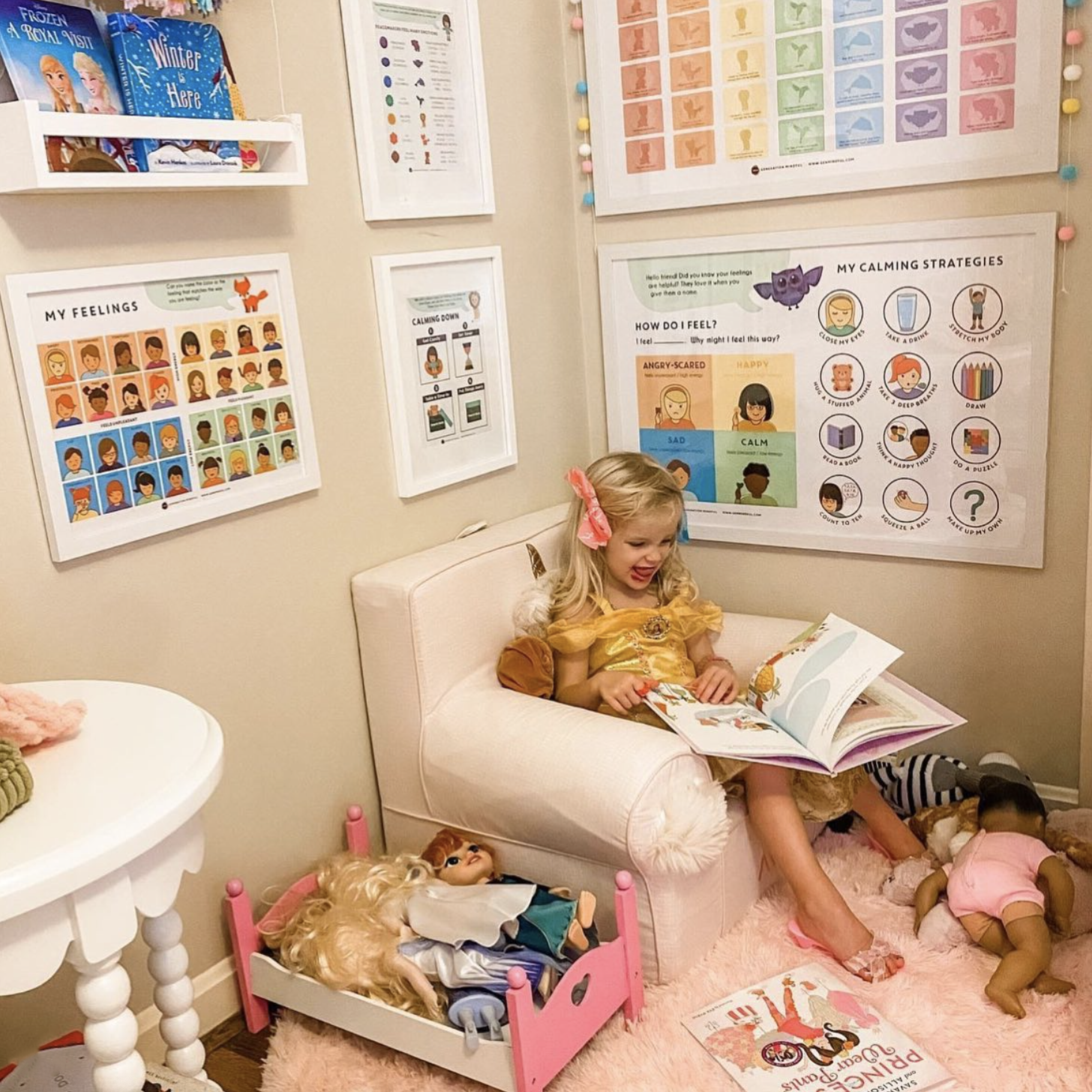
When you are ready to build it out, our Time-In Toolkit gives you everything in one place: feelings posters, breathing cards, calming corner tools, and a step-by-step guide that works at home and in the classroom. It's the kind of support that turns good intentions into real, lasting habits.
You are not just setting up a corner. You are setting up a lifelong relationship with feelings. And that is the most important room you will ever build.
Generation Mindful creates educational tools, toys, and programs that nurture emotional intelligence through play and positive discipline. Join us and receive positive parenting tools and support in your inbox each week.